Your role in a few words?
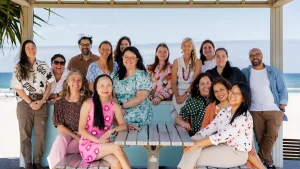
As Operations Director of Agir pour un Tourisme Responsable (ATR), I lead a collective of travel companies that differ in profile and in how far along they are, but share the same goal: to bring lasting change to the travel industry. My job is to give that collective momentum a structure: helping members build their skills, pooling knowledge and tools, making it easier for them to work together, and making sure commitments turn into credible action. We make sure everyone can move forward at their own pace, without pressure or guilt, but with a clear expectation of continuous progress - a core principle of our approach. Travel professionals have to be careful not to saw off the branch they are sitting on. That means understanding what is at stake, anticipating change and acting collectively. Responsible tourism is not a fixed standard; it is an evolving path, built on continuous improvement, cooperation and transparency.
Your view on current developments? For example: several destinations are now trying to strike a better balance between visitor numbers, residents’ quality of life and the protection of natural resources. In your view, what change has become essential to move from commitments to tangible results?
Tourism today is a sector under strain, but also one in transformation. Destinations are trying to balance visitor numbers, residents’ quality of life and the protection of resources. At the same time, the pressures are mounting: rising prices, anti-tourism sentiment, fragile ecosystems, overstretched infrastructure. I believe tourism holds tremendous opportunities, but it can also create real threats. Our responsibility is to maximize the positive impacts and minimize the negative ones. Responsible tourism can no longer rely on isolated initiatives or on goodwill alone. It has to be built on collective work, shared resources and joint oversight. At ATR, this is a founding principle: without a common framework, there is no trajectory; without a trajectory, there are no results. In practice, this means:
- Shared tools and indicators, and a commitment to continuous progress, to structure each company’s trajectory, measure what has been achieved and let everyone move forward with confidence.
- The coordinated involvement of host destinations, residents and local stakeholders, because sustainable tourism depends on a social, cultural and environmental balance.
- A positive vision and closer cooperation between professionals, to pool solutions, avoid duplicated efforts and lock in concrete, measurable choices.
When companies have a clear framework, support and collective momentum, progress becomes visible: lower emissions, better resource management, local value creation, greater inclusion.
The shift we need is not only technical, it is cultural. It means seeing responsibility not as a constraint but as a driver of performance and a shared project. That is the vision we stand for: tourism that moves forward step by step, but together.
L’évolution indispensable n’est pas seulement technique : elle est culturelle. Il s’agit de considérer la responsabilité non comme une contrainte, mais comme un levier de performance et un projet commun. C’est cette vision que nous portons : un tourisme qui avance, pas à pas, mais ensemble.
What message would you like to share with the professionals reading this?
Je voudrais d’abord rappeler que le tourisme responsable n’est ni une niche ni une contrainte : c’est une véritable opportunité stratégique. Les attentes des voyageurs évoluent, les réglementations se renforcent, les destinations s’organisent. Ceux qui anticipent aujourd’hui seront les acteurs solides de demain.
Ensuite, j’aimerais dire que personne n’a besoin d’être parfait pour commencer. Ce qui compte, c’est la sincérité de la démarche, la volonté de progresser et l’envie de contribuer à un secteur qui a du sens. Comme je l’ai déjà expliqué, le principe de progression est au cœur de notre approche : il permet d’avancer à son rythme, sans surpromettre, sans se comparer, mais avec une trajectoire crédible.
Je veux aussi rappeler que vous n’êtes pas seuls. La transition ne se fait pas individuellement, mais collectivement. ATR existe précisément pour accompagner, relier et outiller les opérateurs. Notre démarche repose sur des principes simples et mobilisateurs : responsabiliser sans culpabiliser, agir ensemble, et valoriser les impacts positifs. Ce sont des repères accessibles, qui permettent de structurer l’action sans l’alourdir.
S’engager, c’est aussi renforcer sa marque employeur, améliorer la qualité des voyages, créer de la valeur pour les territoires et contribuer à la préservation des ressources. Le tourisme peut redevenir un projet de société : un projet qui crée du lien, de la compréhension et de la rencontre. Un projet qui participe à la transition écologique, sociale et culturelle.
Et ce projet, nous pouvons le construire ensemble.